
Since this is so, doesn't it stand to reason that we should devote a good deal more time to language than we do? And since the more tongues we learn the better we understand our own, shouldn't learning other languages have a high priority? Part of the teaching we should impart to our chelas is never to stop struggling with language, recognizing that it must always be welcomed as a challenge. In every M/magic(k)al community - whether in a sophisticated modern city or in the midst of a Stone Age tribe, the magician is always the one who knows the longest words and can use them. What is a "spell", after all? What is gematria, but an attempt to dissect words and rebuild them? A "grimoire" was originally a "grammar." "Vedanta" is actually the "grammar" of the Sanskrit Vedas! As we begin to understand more about the Past and the necessity to turn back to it, we see that language looms larger and larger in human consciousness. The ancients understood what we have forgotten - birds fly and lions predate, but language is what man does. It is language that lies behind everything we make, which is why the word "poet" derives from a Greek word meaning "one who makes," the most important thing being, for the Greeks, to make words and which is why in the bible it is said, "In the beginning was the word." Words, like all things that are made, come out of the Void, magically. And words come before the thing! A spider may weave a web but it is always the same web built on the same blueprint resident in her instincts, no different from the eggs she lays instinctively. Compare that to the variety of human works! By the same token, the man who has no language is not just a spider that can't weave webs. He is a frog that can't leap, a seal that can't swim, a deer that can't run.
The reason Latin, Greek and Sanskrit are hard to learn is that they are ancient tongues and our linguistically-diminished consciousness is no longer able to deal with convolutions of thought and esoteric syntax. Nevertheless, it's still true that if you really want to understand Plato or the author of Genesis you must learn Ancient Greek and Hebrew. There was a time when English also used conjugations and declensions as highly structured as Latin. Today we can barely translate Shakespeare. The progress of language always mirrors the deterioration of the human spirit and moves downward from difficult to easy. And in return, as language decays it brings civilization down with it. Already it's virtually impossible for all but a handful of scholars in the world even to attempt to master anything bizarre, like Babylonian cuneiform or Mayan hieroglyphs - although a century ago, when all well-educated people knew Latin and Greek, such studies, had the material been available, would have been relatively common. If the day ever comes that we should actually encounter an extraterrestrial civilization, we will discover to our dismay that our technology is useless. Because we have lost our sense of language, to attempt to learn what they are saying may be completely beyond our capacity. We've traded communication for the ease of machines.
It seems to be a rule that the more advanced into magical understanding that the initiate proceeds, the more he is obliged to recognize his own physical limitations. Crowley, for all his miracles, never really overcame his addictions to morphine and cocaine. Gurdjieff was more successful in being able to control his body and to transfer energy and healing powers from himself to others because he abandoned the occult early on for "objective magic", his own brand of highly pragmatic community yoga. But to acquire even the slightest control over basic physiological functions takes several years of serious yogic practice. And to effect the most minor of changes in the nature of human society takes all of one's efforts over a long course of time.
The all too common notion that "magic" is a synonym for "easy" is deplorable. People seem to be impressed more by speed of accomplishment and minimization of human labor than by the things themselves. Rather than being awestruck by the beauty of the palace, we are impressed instead by the djinni's instantaneous teleportation of it. Magic in the 20th Century has become a minor attribute of technology. Jet flight, television and micro-wave cooking at the touch of a button - these are magic for the multitudes, the limits of hoi polloi imagination. Yet there is more wonder in a horse than in an automobile. A good meal that takes hours to prepare is a lot more "magical" than a fast-food sushi-burger.
A student of the Academy of M/magic(k)al Arts recently asked, "How can you tell when what appears to be magic is really a trick?" I suppose most people will always confuse prestidigitation with thaumaturgy. Although stage magic never has any but a trivial, useless result, "real magic" is a significant act that alters reality for the better. Never forget that we dwell in a world of illusion - what the East calls maya - indeed the roots of magic and maya (mag-, may-) are the same. Reality is nothing more than a consensus, an agreement of the crowd, that thus and thus is so. If your eyes were closed you'd be unable to tell the difference between a peacock feather tickling your nose and a fly lighting upon it. The true magus doesn't do "tricks" because the world itself is already a piece of legerdemain. Instead, he is bent on embuing the world with a new meaning, with transforming the basic foundation of the hell that we inhabit.
Papa Legbha is the god of the knotted stick (phallus), the strongest God of the Voodoo religion. He is the guardian of the crossroads and opener of the way for the other gods to follow, and the last son of the Creator God and equated in the New World with the Devil. He appears as a ragged old man with a crutch, pack on back and pipe in mouth. Leghba desires the human race in a lustful way and every voodoo magician, at some point, experiences a desire for sexual union with Leghba, whereupon, if he is accepted, the supplicant enters an initiation into the deepest mysteries of all.
(Note: Readers who wish to know more about Voodoo, should read Bertiaux's "Voodoo-Gnostic Workbook" and those who are familiar with computer games, will find Gabriel Knight - Sins of the Fathers (which is set in New Orleans) very instructive.
Some typicl Leos are: Napoleon, Simon Bolivar, Amelia Earhart, Bella Abzug, Maxfield Parrish, G.B. Shaw, Carl Jung, Mick Jagger, Aldous Huxley, Alexandre Dumas, Charlotte Corday, Mussolini, Emperor Claudius, Henry Ford, Melville, Scopes, Shelley, Neil Armstrong, Tennyson, Andy Warhol, Mata Hari, Sylvia Sidney, Madame Blavatsky, Diamond Jim Brady, Alfred Hitchcock, Fidel Castro, Annie Oakley, Mae West, Mme. du Barry, Melvin Belli.
Famous Librans: Pavlov, Gandhi, Le Corbusier, Himmler, Saint-Saëns, Annie Besant, Verdi, Virgil, Nietzsche, Oscar Wilde, Cervantes, Joan Fontaine, Carrol Lombard, Aleister Crowley, Timothy Leary.
In traditional Xtianity, Logos is the actual and exact word of God incarnate; Controlling principle of the Universe (Jesus as the second person in the Trinity); Divine Creative Word. To understand what "Logos" means in a non-Xtian context, it is necessary to understand the Greek philosophical concept of language and the Greek recognition of the mythopoetic power of words. This dynamic was uprooted from its normal place in the language, redefined as a Xtian principle and thereby stripped of all past associations.
Leary, R.A. Wilson and P.K. Dick must all have picked up the same vibration, being convinced that old age and mortality should no longer be necessary in the 21st Century. The telomeres (cellular time-clocks) can be manipulated. The resultant immortals will not be eternally youthful eloi, but will resemble ordinary middle-aged folks. Jonathan Swift in his A Voyage to Struldbrugg points out that immortals tend to weary of life after a hundred years or so and to forget what they have learned. If birth is not controlled in a world of immortals, the extras will have to deported into outer space... to go hence, whither? Of course, the cost of building enormous spaceships to accommodate billions of passengers may exceed our monetary limits, not to mention the natural resources available within the solar system.
in which P-P1 representes the difference between the last winning number and the previous number, N is your personal numerological designation (or lucky number) and L is the new winning number.
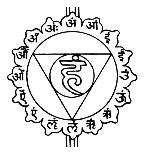 The lotus is the symbol of conscious immortality. It is also the
symbol of the world of manifestation. As the seeds contain the plant in
miniature, it is the microcosm in the macrocosm, past present and future. Brahma
was born from the lotus, and the Buddha called therefrom. In Egypt, Horus was
born of the lotus, and it was equated with the Sun. Rooted in the mud, it rises
through the water and opens in the air to receive the fire of the sun. Thus it
encompasses all elements.
The lotus is the symbol of conscious immortality. It is also the
symbol of the world of manifestation. As the seeds contain the plant in
miniature, it is the microcosm in the macrocosm, past present and future. Brahma
was born from the lotus, and the Buddha called therefrom. In Egypt, Horus was
born of the lotus, and it was equated with the Sun. Rooted in the mud, it rises
through the water and opens in the air to receive the fire of the sun. Thus it
encompasses all elements.
(See OM MANI PADME HUM).